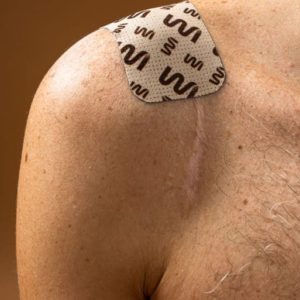
Scars: the complete guide to tissue regeneration
The essentials in 30 seconds. A scar is not simply a «memory» of the skin: it's a tissue under construction that can take a long time to heal. up to 18 to 24 months to completely remodel. During this period, some scars remain red, pull, hurt or even cause pain at a distance. To heal properly, your body needs three things: good microcirculation (which provides oxygen and nutrients), regular tissue mobilization (which prevents adhesions), and of time. The patch STIMCARE SCAR acts like an infrared mirror, stimulating your own microcirculation and activating the natural production of nitric oxide (NO), the key molecule in tissue remodeling - Nobel Prize in Medicine 1998. Posted directly on the scar once the wound has closed properly (never on an open wound), it supports regeneration, complementing the care provided by your doctor and physiotherapist.
Article written by Arnaud Tortel, physiotherapist and founder of STIMCARE, and the STIMCARE editorial team.
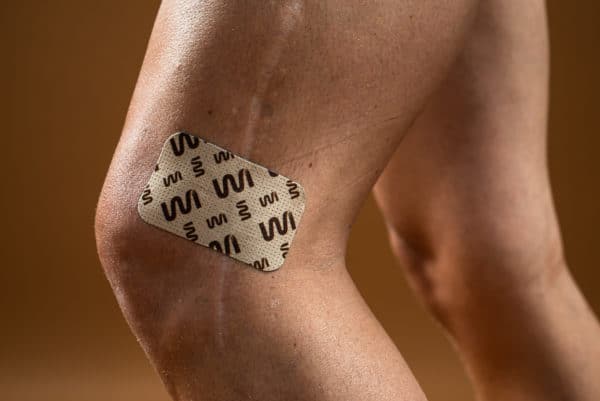
An operation that went well, an accident that went away, successful cosmetic surgery: there's still that line on the skin, sometimes discreet, sometimes cumbersome. A scar that pulls when you wake up. A scar that remains red for months afterwards. A scar that, strangely enough, seems to awaken pain elsewhere in the body. You have no idea: healing is a long, complex and sometimes imperfect process. The good news is that you can accompany. This guide gives you everything you need to know: the science behind scars, the right gestures, the pitfalls to avoid, and how STIMCARE CICATRICE fits into a global approach.
What is a scar?
A scar is a repair tissue, It's not identical to original skin: it contains more collagen, fewer elastic fibers, and its cellular architecture is less organized. It is not identical to the original skin: it contains more collagen, fewer elastic fibers, and its cellular architecture is less organized. As a result, it may pull, lack suppleness, or have a different color from the rest of the skin.
Scar formation follows a precise biological program that unfolds in three stages four phases and can be spread over 18 to 24 months before the final result is stabilized. All the while, the scar is a living tissue under construction, reacting to what you do - or don't do - to support it.
The 4 physiological phases of wound healing
Understanding the phases means understanding when to act and with what. Nature doesn't skip stages - and neither can you.
Phase 1 - Hemostasis (from injury to 24 hours)
As soon as the injury occurs, the vessels contract and a fibrin clot forms to stop the bleeding. This phase lasts from a few minutes to a few hours. This is the biological emergency phase: you don't have to do anything, your body takes care of it.
Phase 2 - Inflammation (from D+1 to D+5 approx.)
The area becomes red, warm and sometimes swollen. White blood cells cleanse the area and signaling molecules prepare for reconstruction. Inflammation is not your enemy It's a signal that your body is working. Respect it, don't crush it. This is also the riskiest phase for infections.
Phase 3 - Proliferation (D+5 to 3 weeks)
Fibroblasts produce collagen and new vessels appear - this is the'angiogenesis. The scar closes and takes shape. This is the phase when microcirculation plays a major role: without a supply of oxygen and nutrients, the new tissues cannot build up properly.
Phase 4 - Remodeling (from 3 weeks to 18-24 months)
Scar tissue is reorganized, collagen reoriented according to mechanical constraints, and the scar becomes lighter, softer and flatter. This is the longest phase, and the one where you have the most influence on the final result. Massages, mobilizations, photoprotection, microcirculation: everything you do during these months counts.
Types of scars: knowing what you have
Not all scars are alike. Identifying the type will guide you towards the right support strategy.
| Type | Aspect | Typical cause | Special features |
|---|---|---|---|
| Normal« scar» | Fine, flat, clear after reshaping | Cut, uncomplicated surgery | Develops favorably in 12-18 months with good care |
| Hypertrophic | Embossed, red, remains within the limits of the wound | Excessive tension, prolonged inflammation | Often regresses with time + care |
| Celoid | Raised, red or dark, protrudes from the wound | Genetic predisposition, dark/matte skin | Does not regress spontaneously - specific support |
| Atrophic | Recessed, depressed in relation to the skin | Severe acne, chickenpox, loss of substance | Difficult to correct - care combinations required |
| Adhesive | Scar tissue glued to deep planes | Deep, post-traumatic surgery | Manual mobilization essential to free the planes |
| Pigmented | Darker or lighter than adjacent skin | Post-healing sun exposure, skin type | Strict photoprotection for at least 12 months |
If your scar is keloid, you will find a specific guide in our article dedicated to keloid and hypertrophic scars. For a scar post-knee replacement, see our post-PTG guide. And for a cesarean section, visit our article caesarean scar.
Why some scars hurt, pull or stay red
A scar is not supposed to hurt indefinitely. If yours pulls, burns or itches months after closure, several causes can combine:
- Excessive mechanical stress on the area - the skin and underlying tissues pull with every movement.
- Deep adhesions - scar tissue has adhered to the muscular or fascial planes below, limiting mobility.
- Prolonged inflammation - the inflammatory phase has not closed properly, and pain mediators remain active.
- Insufficient microcirculation - the tissue lacks the oxygen it needs to complete its maturation.
- Nerve compression - a small nerve thread was caught in the healing process.
- Pathological« scarring» - keloid, advanced hypertrophy.
Itching, in particular, is often a sign of scarring. still in the remodeling phase It's not a bad sign in itself, but it's a call to mobilize and hydrate.
Scars and remote pain: what we know
Some scars may cause pain or restricted mobility. remote, A scar on the abdomen that «pulls» on the diaphragm and blocks breathing. An abdominal scar that "pulls" on the diaphragm and blocks breathing. A knee scar that alters posture and triggers lower back pain. The phenomenon is not anecdotal: myofascial chains link areas of the body that we'd never imagine to be connected.
STIMCARE has published a full article on the subject: can your scars be the cause of your pain?. If you experience unexplained pain that seems to start after a procedure, talk to your physiotherapist. Mobilization of the scar may be all that's needed to unblock the situation.
Microcirculation, angiogenesis and nitric oxide: the science of remodeling
For tissue to rebuild properly, it needs a blood supply. Not just large vessels: the microcirculation, These are the finest capillaries that irrigate each cell. Without it, cells lack oxygen and nutrients, and healing lags or partially fails.
Angiogenesis: creating new vessels
L'angiogenesis is the process of forming new capillaries. It is a key stage in the proliferation and remodeling phase. The more efficient angiogenesis is, the more the scar receives what it needs to finish maturing properly.
Nitric oxide (NO): the remodeling molecule
L'nitric oxide (NO) is a molecule produced naturally by your body via an enzyme called eNOS (endothelial Nitric Oxide Synthase). Its discovery earned the Nobel Prize in Medicine in 1998 to Robert Furchgott, Louis Ignarro and Ferid Murad. NO plays three essential roles in wound healing:
- He dilates vessels and improves local microcirculation.
- He stimulates angiogenesis by encouraging the creation of new capillaries.
- He modulates inflammation and supports the migration of fibroblasts - the cells that produce collagen.
The more physiological NO available locally, the greater the chance that the scar will remodel under the right conditions. This is precisely what eNOsyntex™ from STIMCARE aims to activate.
Validated care for scars
There are several tried-and-tested procedures. Combine them according to the stage and type of scarring.
1. Photoprotection (minimum 12 months)
A scar exposed to the sun during its first year can long-lasting pigmentation. SPF 50+ cream, clothing, or opaque bandage. It's non-negotiable.
2. Daily hydration
A moisturized scar is more supple, less itchy and heals better. Neutral or copper/zinc-enriched creams, to be applied morning and evening as soon as the wound is closed.
3. Massage and mobilization
As soon as the scar is closed and solid (generally after 3 weeks, to be confirmed with your doctor), begin gentle massages. You'll find precise protocols in the next section.
4. Silicone dressings
Silicone sheets or gels are standard for scars at risk of hypertrophy or keloids. Usual recommendation: 12 to 24 hours a day, for 2 to 3 months.
5. Stimulation of microcirculation
This is the angle of attack brought by STIMCARE CICATRICE - detailed below.
6. Patience and regularity
Regularity beats intensity. Five minutes every day is better than an hour once a week.
Manual mobilization of scar tissue: why it's essential
Manual mobilization has two objectives:
- Prevent adhesions scar tissue with the deeper layers (muscles, fascia).
- Stimulate collagen remodeling by orienting the fibers in the direction of mechanical stress.
Three basic techniques that you can perform yourself, after medical approval and ideally after a demonstration by your physiotherapist:
- Palpating and rolling Pinch the skin around the scar between thumb and forefinger, and roll the fold. The skin should peel away. If it «clings», there's an area of adhesion to work on.
- Bidirectional stretching Place two fingers on either side of the scar and stretch it in all directions (up-down, left-right, diagonals).
- Circular kneading With your fingertips, make small circles along and around the scar.
When to start? Generally from D+21, when the scar is solid and there is no longer any risk of disunion. Always check with your doctor or surgeon.
How often? Ideally 5 to 10 minutes, twice a day, for 3 to 6 months. The more recent and fragile the scar, the gentler the mobilization.
STIMCARE CICATRICE: the complete protocol
The STIMCARE CICATRICE patch is a Class I medical device (CE Mark, MDR 2017/745) designed to support tissue regeneration. It acts as a infrared mirror It captures the natural infrared rays emitted by your body (4 to 20 µm) and sends them deep into the tissues (40 to 50 mm beneath the skin). These infrared rays activate the eNOS enzyme, which produces physiological NO. The result: a sustained local microcirculation and a stimulated angiogenesis, both essential conditions for quality scar remodeling.
How to use it: the protocol
| Step | What to do | Duration |
|---|---|---|
| 1. Prepare the skin | Clean, dry skin, free of creams and oils. | — |
| 2. Position patches | 1 to 2 patches directly on the scar once it's properly closed. Never on an open wound. | — |
| 3. Wear patches | Shower-resistant. Minimum 3-day wear. | 3 days minimum |
| 4. Renew | Remove after 8 to 10 days, wait 24 hours, then apply a new patch. | Every 8-10 days |
| 5. Involvement in mobilization | Daily massage of scar tissue (technique above). | 5-10 min × 2/day |
| 6. Protocol duration | Throughout the remodeling phase, i.e. 3 to 6 months depending on the scar. | 3-6 months |
Golden rule: the patch goes on on the closed scar, Never apply to an open or oozing wound. Wait for complete closure and medical approval before starting.
Discover the STIMCARE CICATRICE patch
Case studies: adapting the protocol to your scar
Post-surgical orthopedic scarring (knee, hip, shoulder prosthesis, etc.)
The priority angle of STIMCARE CICATRICE. Post-prosthesis scars are often long, subject to considerable stress during rehabilitation, and can pull for months. The patch is used as a complement to physiotherapy. Complete post-knee replacement guide.
Post-cosmetic surgery scarring
The scar issue is central: it's what the patient will see. The CICATRICE protocol complements the plastic surgeon's recommendations and supports quality remodeling. Aesthetic scar guide.
Cesarean scar
A scar that can pull months after childbirth, sometimes well after the immediate postpartum period. Accompanying it with mobilization and microcirculation helps restore abdominal comfort. Cesarean scar guide.
Old acne scar
A specific challenge: scars that have already set in, sometimes for years. The microcirculation angle can support late remodeling, as a complement to dermatological treatments. Acne scar guide.
Keloid or hypertrophic scarring
Special case requiring a specific approach, often in combination with other treatments (silicone, dermatologist). Keloid guide.
Coordination between physio, surgeon and patient: who does what?
Good healing doesn't just depend on you. Three players work together:
- The surgeon He places the scar and gives the go-ahead for treatment (mobilization, patching, sports).
- The physiotherapist He trains the patient in mobilization, monitors adhesions and adapts the intensity.
- You You apply the daily routine (moisturizing, photoprotection, massage, patch). Regularity pays off.
If one of the three links is missing, the result won't be as good. Never hesitate to ask your surgeon questions about the scar - it's not a side issue, it's what will stay with you.
Precautions, contraindications and proper use
- Never on an open wound. The patch is applied directly to the scar once it has closed.
- Natural latex allergy The patch's glue contains natural latex. Not recommended in cases of known allergy.
- Pregnant women As a precaution, use is not recommended during pregnancy.
- Injured skin, eczema, infection Do not apply to affected skin.
- Medical validation For recent scars, ask your surgeon or doctor for advice before starting.
- Old stagnant scar If a scar is more than 24 months old and shows no signs of evolution, talk to a dermatologist before starting a protocol.
Testimonials: what patients say
«After my knee replacement, my scar would pull whenever I tried to bend beyond 90°. My physiotherapist told me about STIMCARE CICATRICE as a complement to massage. I put a patch on each side every week for three months. After six weeks, the scar was softer, less red, and I was gaining degrees in flexion. I'm not saying it's miraculous - I also did my rehabilitation seriously - but it's one of the things that helped me.» - Patient, 64 years old, post-PTG
(Individual testimonial - results may vary from person to person. STIMCARE CICATRICE is a medical device, not a drug treatment. Effectiveness depends on scar type, clinical context and regularity of use).
Frequently asked questions about scars
How long does it take for a scar to become «permanent»?
The complete remodeling of a scar can take up to three months. 18 to 24 months. During this period, the color lightens, the relief flattens out and suppleness improves - provided it is properly supported. After 24 months, changes become marginal and the result is generally stabilized.
Can a scar disappear completely?
No. No treatment, no device, no surgical procedure can disappear a scar. On the other hand, we can greatly improve its appearance, suppleness and comfort. The realistic goal is a more discreet, flexible and painless scar.
When can I start massaging my scar?
Generally from J+21, when the scar is closed and solid. Always check with your surgeon: some operations require you to wait longer. Before D+21, simply moisturize and protect.
Where exactly is the STIMCARE CICATRICE patch applied?
Directly on the scar, once it is tightly closed and solid. Never on an open, oozing or unhealed wound. If you have the slightest doubt about the closure of your scar, ask your surgeon or doctor for advice before applying the patch.
How long do I have to wear STIMCARE CICATRICE to see an effect?
A patch remains active for 8 to 10 days. The complete protocol is spread over 3 to 6 months, depending on the type and age of the scar. Regularity is more important than intensity: a patch every week for 3 months is better than a patch every day for 2 weeks.
Can I use it on an old scar (several years old)?
Yes, an old scar can still benefit from microcirculation stimulation and mobilization. Results are generally more modest than on a recent scar, but not nil - especially if it remains painful or adherent.
Is the patch a medicine?
No. STIMCARE CICATRICE is a Class I medical device (CE marked, MDR 2017/745). It contains no active ingredients and nothing penetrates the skin: it acts solely as an infrared mirror, reflecting the body's natural infrared rays back to the tissues.
Are there any side effects?
The patch contains no drugs and is not subject to any drug interactions. The only known risk is allergic reaction to natural latex contained in the glue. If you are allergic to latex, do not use the patch.
How much does the CICATRICE patch cost?
Box of 6 patches 20.90 € INCL. VAT. The box of 16 patches is at 42.90 € INCL. VAT. Free shipping. The device is not reimbursed by Social Security.
Should I continue manual mobilization if I use the patch?
Yes, absolutely. The patch and mobilization act on different and complementary levers: the patch supports microcirculation and NO; mobilization prevents adhesions and orients collagen. Both together are better than either alone.
Glossary
- Angiogenesis biological process of new blood vessel formation, essential for healing.
- Celoid raised pathological scar that extends beyond the original wound, more common on darker or darker skins.
- Collagen main protein in scar tissue, produced by fibroblasts.
- eNOS endothelial NO synthase enzyme, physiological producer of nitric oxide.
- FIR Far Infrared (4-20 µm), naturally emitted by the human body.
- Hypertrophic keloid: a raised scar that remains within the limits of the wound (to be distinguished from a keloid).
- Microcirculation Circulation in the finest capillaries, essential for oxygenation and cell nutrition.
- NO nitric oxide, a natural vasodilator gas whose role was recognized by the 1998 Nobel Prize in Medicine.
- Remodeling final and longest phase of healing, during which scar tissue reorganizes itself.
Scientific sources
- Furchgott RF, Ignarro LJ, Murad F. Nobel Prize in Medicine 1998 - Discovery of the role of nitric oxide as a signalling molecule in the cardiovascular system. Nobel Committee
- Luo JD, Chen AF. Nitric oxide: a newly discovered function on wound healing. Acta Pharmacologica Sinica, 2005.
- Rabello FB, Souza CD, Farina Júnior JA. Update on hypertrophic scar treatment. Clinics, 2014.
- French Society of Dermatology. Recommendations for the management of pathological scars. SFD
STIMCARE SCAR is a CE-marked Class I medical device in accordance with European regulation MDR 2017/745. Please read the instructions carefully