
Sport
Class I Medical Device: Why STIMCARE Patches Are Included
What is a Class I medical device? Find out why STIMCARE patches are classified as such and learn about the concrete benefits this classification offers you.

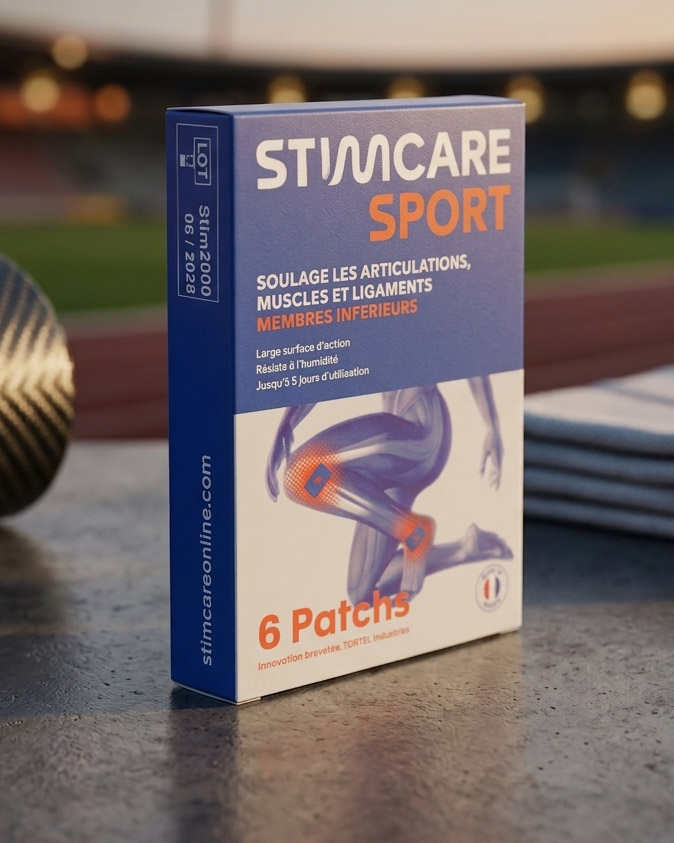
STIMCARE Medical Device
STIMCARE SPORT, for Achilles tendon discomfort
When heel discomfort occurs while running or when resuming exercise, STIMCARE SPORT is a medical device designed for adult athletes to provide temporary relief from muscle, joint, and ligament discomfort related to sports activities. Apply it to healthy skin on either side of the Achilles tendon, then to the lower third of the calf and just below the knee crease.
Class I medical device, CE marked. Intended for adults. Read the instructions carefully before use. Contains natural latex: not recommended for individuals with a latex or rubber allergy. Not recommended during pregnancy. Do not apply to broken skin. Manufactured by TORTEL Industries, 2761 Les Rouvières, 26220 Dieulefit, France.
Visit Achilles tendon is the thickest tendon in the human body. It connects the triceps sural muscle to the heel. This area contains small pockets of synovial fluid. Called bursae, these pockets facilitate gliding and reduce friction during movement.
We speak of Achilles tendon bursitis or calcaneal bursitis when one or more bursae become inflamed. Pain occurs when walking, stretching or training. The area becomes red, tender and swollen. Suffering can be very intense and lead to serious complications if not treated properly.

Depending on the location, the symptoms may be as follows:
Whatever the symptoms, it's essential to consult a doctor to rule out other pathologies.

The shoes and foot positioning are the primary risk factors. Too rigid an upright at the back of the sneaker can cause excessive and abnormal pressure on the Achilles tendon.
Sportsmen and women are often exposed to the risk of bursitis. Continuous rubbing of the tendon against the shoe, or specific, repeated movements, can cause inflammation. Some sports such as rugby, soccer and trail running, are particularly prone to calcaneal bursitis.
External factors can also play a part, the heel will work differently on harder ground.
Finally, joint pathologies can cause Achilles tendon bursitis.
The pain caused by Achilles tendon bursitis can be intense and far-reaching if left untreated, so it's essential to address the condition at the very first signs of inflammation. The good news is that there are some very simple, natural solutions for rapid pain relief:
Achilles tendon bursitis is a painful and very bothersome condition that requires prompt treatment to reduce the risk of it getting worse and to restore comfort during your workouts.
What is a Class I medical device? Find out why STIMCARE patches are classified as such and learn about the concrete benefits this classification offers you.

You've just finished your workout, you're proud of your effort and you should be! But be careful: what you do in the minutes and hours following your workout is just as important as the workout itself. Discover the three most common mistakes that
In our constant quest for well-being, we often look for complex solutions when the simplest are often the most effective. Today, sport as a natural solution represents one of the most powerful approaches to taking care of our health, without the need for systematic recourse to medication.